-
The pattern
Every Burgundy Paris creation begins with a design phase carried out on CAD software. This stage sets the proportions, the volumes and the different elements that will make up the bag. The digital pattern is then refined to ensure the coherence of the construction and the precision of every assembly.
-
The cutting
Once the pattern is set, each piece is cut by hand with a blade or a precision scalpel. The gesture calls for control and attention, following the lines of the pattern while respecting the character of each hide. This stage brings to life the elements that will gradually become the piece.
-
The skiving
Skiving thins the leather in certain areas with a skiving blade. The technique allows for finer assemblies and makes the material easier to work through the following stages. Each area is treated according to the needs of the construction, to preserve the balance between fineness and strength.
-
Gluing and reinforcement
Gluing and the placement of reinforcements build the structure and the hold of the bag. A water-based glue keeps the pieces in place before assembly. The reinforcements are positioned according to the needs of each element, to preserve the volumes and the hold of the piece.
-
Edge creasing
Grooving traces a guide line on the leather close to its edges. This line follows the contours of the piece and contributes to the aesthetics of its construction. It calls for regularity and precision, to follow the curves naturally and keep a harmonious finish.
-
The saddle stitch
The saddle stitch is worked entirely by hand, following a traditional technique of leather craftsmanship. Each stitch is formed with two needles, joining the pieces of leather with regularity and strength. The gesture calls for patience and mastery, since the quality of the stitching rests on the precision of every single stitch.
-
The edges
The edges of the leather are prepared, then dyed, to achieve a regular border and a clean finish. This stage calls for several passes and meticulous work to obtain an even surface that follows the lines of the piece. The dyeing perfects the contours of the leather and contributes to the quality of its finish.
-
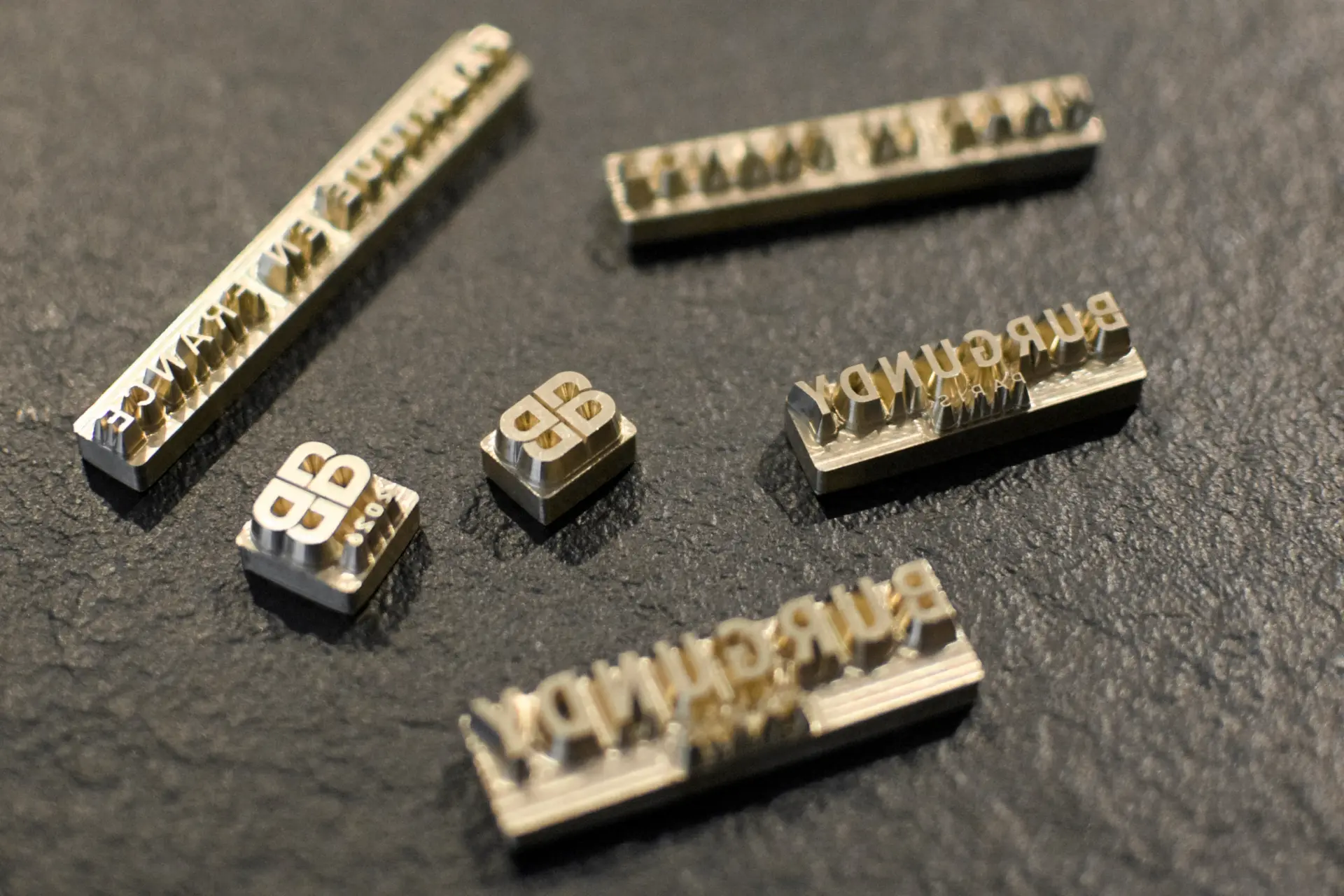
Hot stamping
Hot stamping marks each creation with the identity of Burgundy Paris. Carried out with precision, it calls for carefully studied placement as well as control of both temperature and pressure. The gold or silver stamping is chosen to echo the hardware, creating harmony between the signature and the bag's metal elements.
-
The finishing
The final stages are devoted to checking and finishing the piece. Every stitch, every edge and every piece of hardware is examined with care, to guarantee the coherence and quality of the whole. The last adjustments complete the work and prepare the piece to begin its new story.