
02 / 03 · Craft
Goat, calf, bull calf. Three French leathers, chosen for their grain, their hold and the way they carry the line of a piece. Three houses prepare them, one per material.
Alran, France
Short, tightly packed fibre. A fine, irregular, semi-matte grain that varies slightly from one hide to the next.
Haas, France
A broad, even fibre, a surface worked smooth or finely grained, sometimes embossed to bring out its relief.
Carriat, France
A thick hide with a dense fibre, its natural grain pronounced enough to need no artifice to stand out.
Under CITES permit
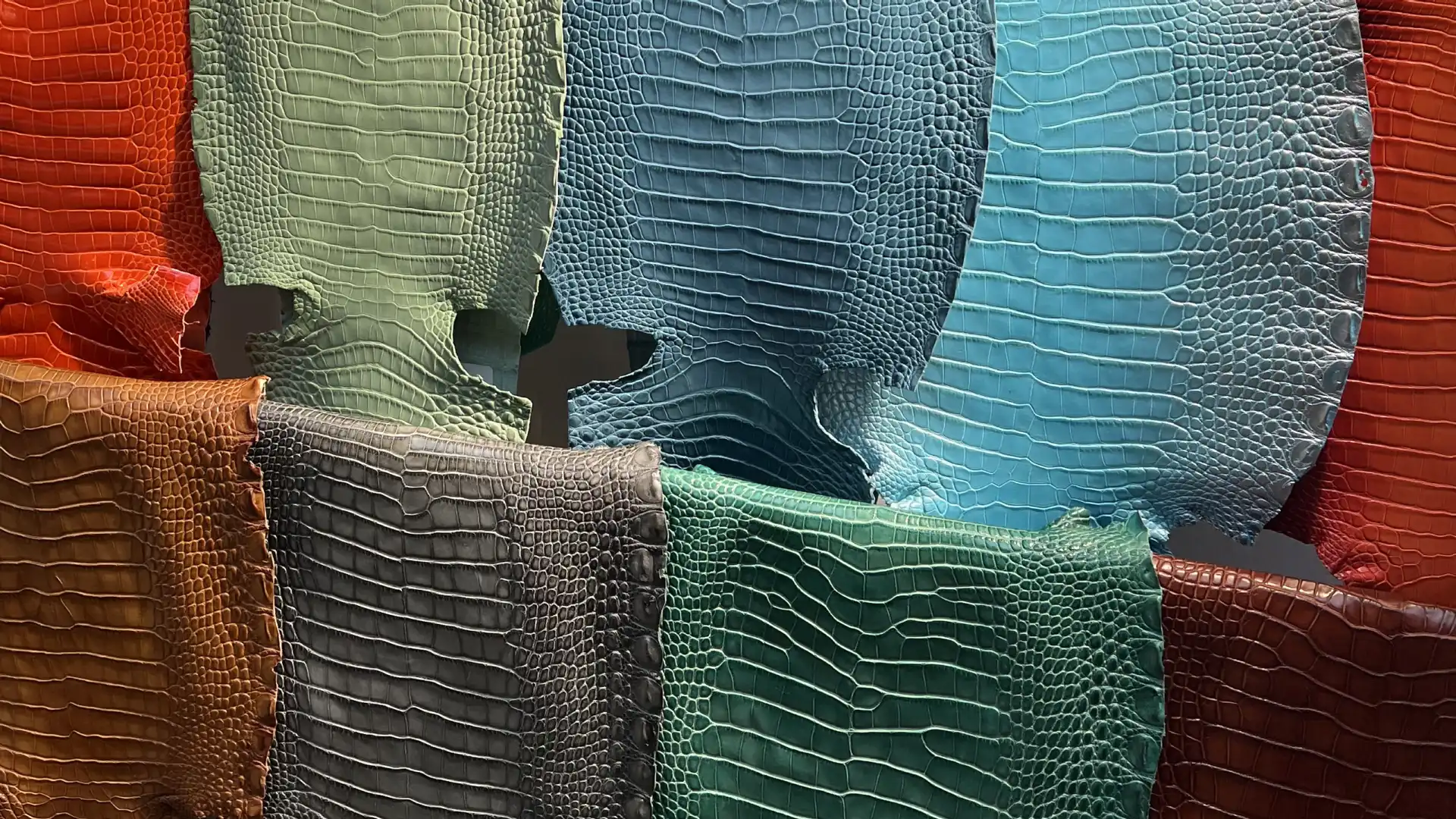
Python, crocodile, lizard, ostrich. Rare skins, under CITES permit, whose scale or grain never repeats twice.
We select the finest hides from among the world's most prestigious French tanneries and dressers. Alran, Haas and Remy Carriat all three hold the Entreprise du Patrimoine Vivant and Leather Working Group certifications, and belong to the Fédération Française de la Tannerie-Mégisserie. Three labels that verify rare know-how as much as a real environmental and social commitment, not one taken on trust.

Mégisserie · Mazamet, France
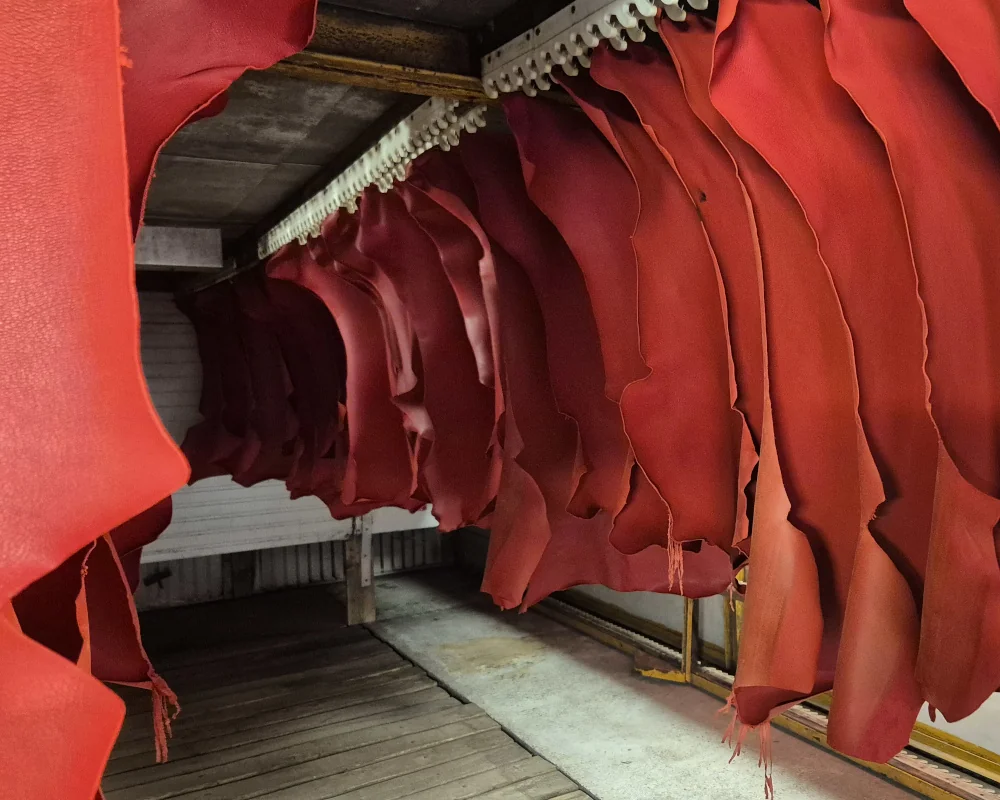
A mégisserie, not a tannery: the gesture changes as soon as it's a goat hide rather than a bovine leather. Alran works only that, with a grain that never quite repeats from one hide to the next.

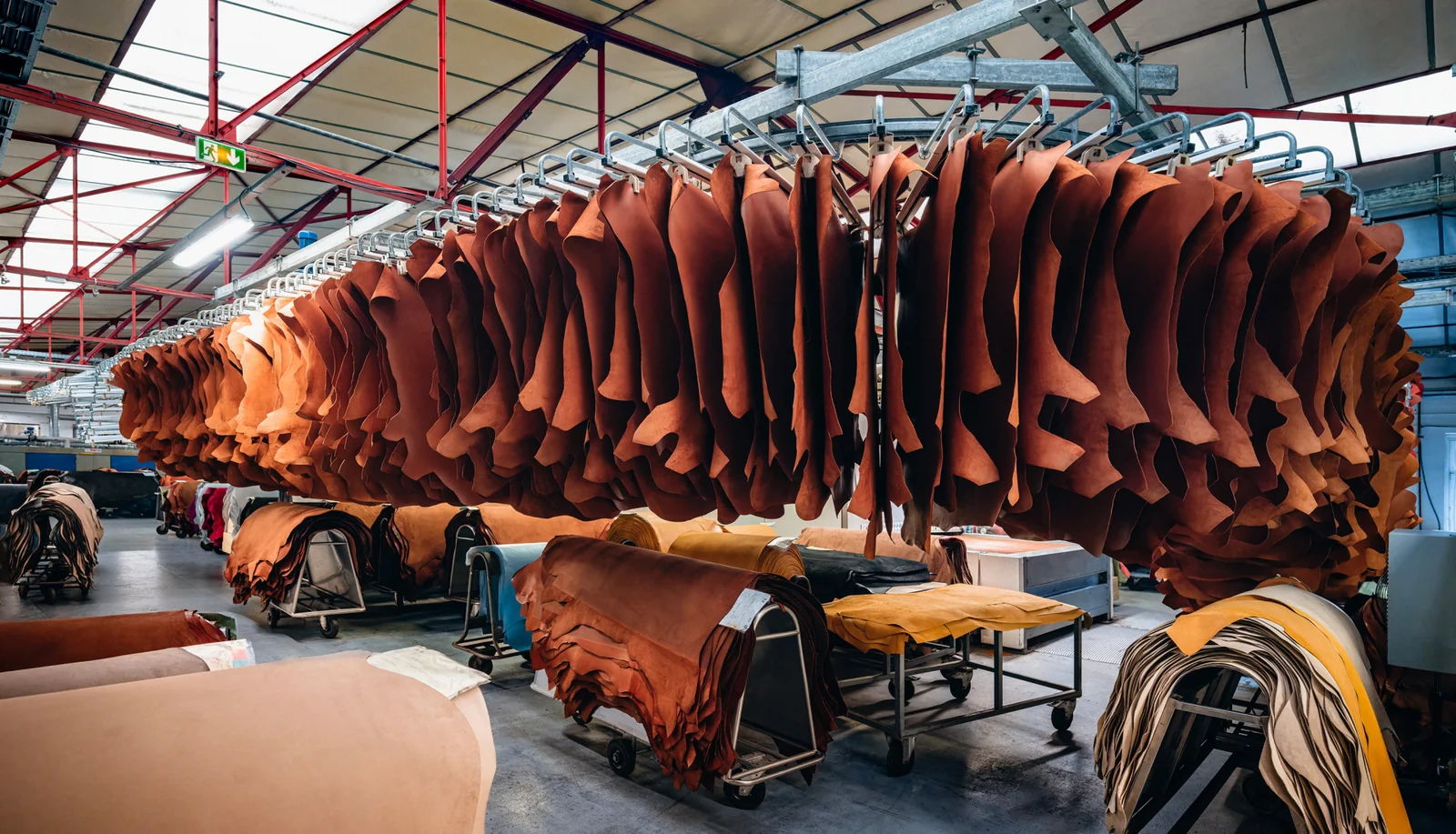


Tannery · Alsace, France
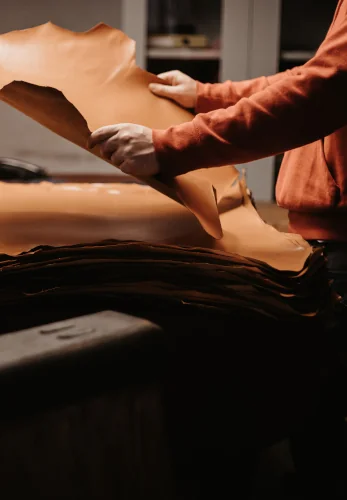
Over four weeks and a hundred handling steps to turn a raw hide into a smooth, even calfskin. Haas tans only that, with the patience this level of consistency demands.

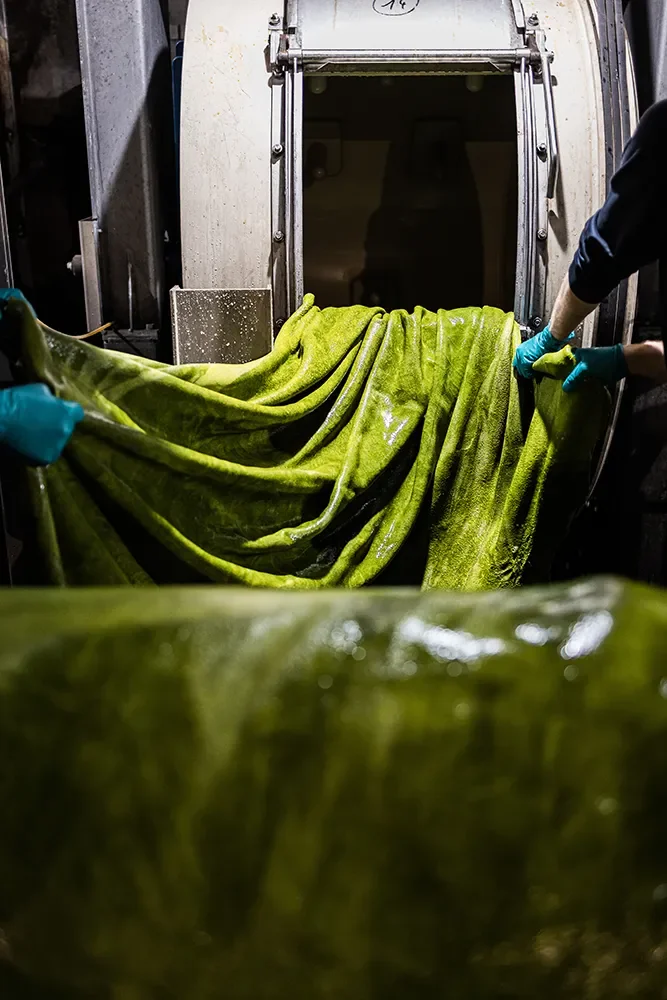

Tannery · Espelette, Basque Country
Every young bull hide is sorted by hand before it reaches the workshop. Carriat has kept to this gesture for a century rather than automating half of it to move faster.
The size of the scales, the regularity of the pattern, the way the dorsal band unfolds: all of this changes from one hide to the next and dictates the cut. The pattern is positioned before it's cut, never the other way round: a single hide may yield only one bag.
Every exotic skin enters under CITES permit, passed on with the piece.
Legal
…
It’s late, and you’re still here. That’s a good sign.